 Get a quote
29th Oct 2026 | Posted by:
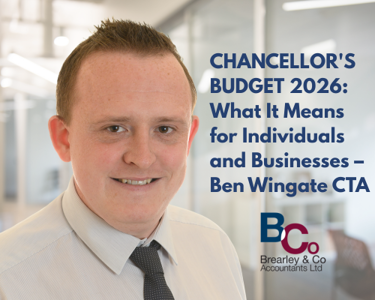
Chancellor's Budget 2026: What It Means for Individuals and Businesses – Ben Wingate CTA
Following yesterday's Budget announcement, businesses and taxpayers across the UK are assessing what the Chancellor's latest measures could mean for their finances, tax planning, and future decision-making.
At Brearley & Co, our Tax Manager, Ben Wingate CTA, has reviewed the key announcements and prepared a concise summary of the most important changes. Ben works closely with businesses, business owners, and individuals across South Yorkshire, helping clients understand complex tax legislation and identify practical opportunities arising from changes in government policy.
Commenting on the Budget, Ben said:
"Many businesses are continuing to face significant challenges, from rising costs and cash flow pressures to ongoing economic uncertainty. This year’s budget makes fairly insignificant changes, which may be a somewhat welcome relief from the large-scale changes made in recent budgets and may help to provide some stability for businesses. While the Budget introduces measures that will affect businesses and individuals, it is more important than ever to understand how these changes apply to your specific circumstances.If you're concerned about the impact on your business, or would like advice on planning ahead, please get in touch with me or the team at Brearley & Co. We're here to help."
Below, Ben shares his key takeaways from the Chancellor's Budget and the areas that businesses and individuals should be aware of moving forward.
BUDGET 28 October 2026 – key points
Overview
- This list includes coming changes that have already been announced, as well as those that the Chancellor introduced today
- Measures which will not take effect until future dates are listed separately below
- If you have any questions, then please do not hesitate to get in touch with your normal tax department or Brearley and Co contact
Implemented immediately
- VAT zero rate on domestic energy bills extended to July 2027
From January 2027
- Household energy payment of £100 to households in Council Tax bands A to D. This payment will made directly to bank accounts if the household pays by direct debit, otherwise bank details will need to be provided to the local council
- First year allowances for eligible plant increased from 40% to 50%
- Banks’ corporation tax surcharge increased from 3% to 6% for 15 months
From April 2027 – personal taxes
- Income tax thresholds and bands frozen (and continue to be frozen until April 2031)
- Income tax rates on property and savings income rise from 20% to 24% (basic rate), from 40% to 44% (higher rate), and from 45% to 49% (additional rate) (the 2 percentage point increase previously announced has become 4 percentage points)
- Income tax rates on dividend income remain 10.75% (basic rate), 35.75% (higher rate) and 39.35% (additional rate)
- Previously announced restriction on amount invested in cash ISAs will not be implemented – limit for both cash and stocks and shares ISAs remains £20,000
- Pensions Tax Allowance introduced to make sure people with income consisting only of the State pension do not pay income tax on it, even if it is more than the standard personal tax allowance (this will apply in all years to 2029/30). This allowance will be tapered for people with other income sources other than the standard new state pension amount
- The basis for company car benefit charges increases by one percentage point for 2027/28. The basis for the car fuel benefit for the year will increase to £30,200
- Benefit charges for company vans and private fuel in company vehicles increased in line with inflation to £4,310 for van benefit and £825 for van fuel benefit
- Recent increase for tax-free mileage allowance confirmed at 55p for the first 10,000 miles which applies from 6th April 2026, and above that the rate of 25p will increase to 35p from 6th April 2027
- Various changes to Company Share Ownership Plans (CSOPs), including an increase in the individual option limit to £120,000 and the option exercise period being extended to 15 years
- For Enterprise Management Incentive (EMI) options granted from 6 April 2027, a company will be required to notify such a grant through the end-of-year return, rather than making a separate notification
- Employers’ NICs threshold frozen at £5,000, and NICs Upper Earnings Limit remains £50,270 (also frozen until 2031)
- NICs Lower Earnings Limit and Small Profits Threshold increased by 3.5%
- Fuel duty remains frozen, and the temporary 5p cut announced in March 2024 will be extended to July 2027
- Rate of tax on foreign domiciled people using ‘temporary repatriation facility’ for income and gains previously subject to remittance basis claims rises from 12% to 15%
From April 2027 – business taxes
- Making Tax Digital for Income Tax extended to those with self-employed and property income of £30,000, and end of the first year easements in relation to filing penalties
- Trading allowance below which the self-employed do not pay tax on trading income increased from £1,000 to £3,000
- Writing down allowances on main rate expenditure cut from 14% to 12% from 1 April 2027 (companies) or 6 April 2027 (unincorporated trades)
- End of the 100% first year allowance for qualifying expenditure on zero-emission cars and charging points for electric vehicles
- Business rates relief threshold raised for most retail and leisure businesses from £12,000 to £18,000
- Mandatory payrolling introduced for four types of benefit-in-kind under PAYE
- Machine games duty increased on larger stakes machines
- Reverse charge for VAT on business services bought from abroad will only apply if the UK purchaser is VAT-registered
From April 2027 – capital taxes
- Assets in unused pension funds become part of the estate for Inheritance Tax on death in most circumstances
- CGT lifetime limit on disposals qualifying for Business Asset Disposal Relief cut from £1 million to £500,000
- Introduction of a new relief (Founders’ Relief) for certain disposals. Lifetime limit was announced as £10 million of chargeable gains and the tax rate as 10%, although details are subject to consultation.
- Assets such as goodwill that are covered by the corporation tax intangibles regime are to be treated as chargeable assets and chargeable business assets in holdover relief calculations for gifts of qualifying business assets, potentially enabling greater deferral of gains
From April 2027 – other
- Increases in National Living Wage and State pension in line with inflation (3.9%)
- This makes the new national living rates from April 2027 £13.21 an hour for workers aged 21 and over, £11.27 an hour for workers aged 18 to 20 and £8.31 an hour for 16 to 17 year olds and apprentices
- The full new state pension will be £250.70 per week and the full basic state pension will be £192.10 per week from April 2027
Later
- Large taxi firms (possibly those with turnover of £50 million) will become liable for VAT on the full passenger fare from 2 January 2028, regardless of the contractual arrangement
- Taxation of distributions from companies will be reformed from April 2028, with the intention of preventing tax advantages for those who can take advice to extract profits in different ways
- Intention confirmed to require in-year payments of self-employment tax liabilities from April 2029
- High Value Council Tax Surcharge to be introduced on properties worth more than £2 million (in 2026) to apply from April 2028: £2,500 for properties over £2 million rising to £7,500 for properties over £5 million
- New mileage-based e-Vehicle Excise Duty payable on use of electric and hybrid cars from April 2028
- From April 2029, salary sacrifice schemes putting more than £2,000 into an employee’s pension will be charged to NICs as if cash salary was paid
- Income from image rights (e.g. of sports stars) to be treated as employment income from April 2028 (not April 2027 as previously announced)
- All VAT invoices to be electronic from April 2029
- All low value import consignments to be subject to customs duties from October 2028 (6 months earlier than previously announced)
- Company car tax rates have now been announced for all years up to 2030-31, to provide long-term certainty; the incentives for purchasing electric vehicles will be maintained
- Plan 2 Student Loan repayment thresholds frozen until April 2030
Looking for advice? Check out our full range of services. From payroll help to taxation advice, our expert team is available to lend a hand.

How can we help you?
Brearley & Co Accountants are pleased to offer a free, no obligation, initial consultation with one of our experts who will be happy to discuss your business needs and how we can help you.
Contact